

Ron Schmittling is a renowned Mental Performance Coach and author of Winning Starts Within and contributes articles frequently to Line Drive Media.
Ron is excellent at providing ideas, tips and training on how to improve “mental performance for fastpitch athletes!
In today’s post, he discusses momentum and how handling the emotional game can mean the difference between winning and losing…
*****
 Each summer, the softball world turns its attention to Oklahoma City for the Women’s College World Series (WCWS) which is held at Devon Park, at the USA Softball Hall of Fame Complex.
And every four years, the sports world turns its attention to the Olympic Games which in 1996 at the Atlanta Games first included softball on this global stage.
Interestingly, the next round of the Olympic Games is two years from this summer, and the softball games will also be played in Oklahoma City… on the very same complex.
Softball championships at any level—be it Little League, high school state playoffs, PGF and Alliance club nationals, the College World Series, the AUSL pro series or the Olympic Games—all have some things in common:
- The lights are brighter.
- The crowds are louder.
- Every pitch suddenly feels heavier.
And if you watch closely during these important title events, you’ll notice something important:
The biggest difference between teams usually isn’t talent; it’s how they handle momentum.
*****
Momentum Is Emotional Before It’s Physical
Most people think momentum starts with a home run.
It doesn’t.
Momentum usually starts with:
- body language
- emotional reactions
- pace
- confidence shifts
- response after mistakes
One team tightens up and the other team senses it immediately.
At this level, everybody is talented… what happens is the emotional game becomes the separator.
*****
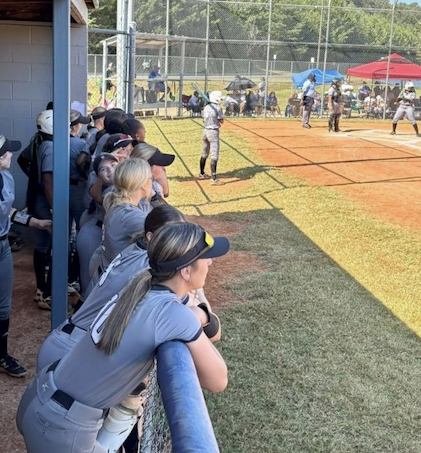
Watch the Dugouts
During any important softball championship game or series, pay attention after:
- an error
- a strikeout
- a missed opportunity
Some teams disconnect:
- heads drop
- silence grows
- athletes isolate themselves
Other teams immediately reconnect:
- energy rises
- teammates engage
- leaders stabilize the moment
That response matters because pressure spreads quickly—but composure does too.
*****
The Best Teams Recover Fast
Elite teams are not perfect, they make mistakes constantly.
The difference is, they don’t stay emotionally attached to mistakes for long.
The strongest programs train:
- reset routines
- breathing control
- communication
- next-play focus
That’s why great teams can give up three runs one inning and still look completely steady the next.
*****

Why This Matters for Young Athletes
Many athletes believe mental performance means:
- being fearless
- never getting nervous
- always feeling confident
That’s not reality—even at, say, the PGF Nationals, the WCWS, the Olympics or in the pro leagues.
Those athletes feel pressure too; the difference is they’ve trained how to respond to it.
Mental performance is not about eliminating emotion—it’s about managing it quickly enough to stay present.
*****
The Big Game Challenge
As you watch events where the pressure is high and every play can decide the difference between winning or losing, stop watching only the score.
Watch:
- body language after errors
- dugout communication
- pitcher recovery between pitches
- hitter routines
- team energy after momentum swings
That’s where the real mental game lives!
*****

Your Challenge The Next Time You Watch A High-Level Softball Event
- Athletes: Watch how elite players recover—not just how they perform.
- Coaches: Talk to your team about emotional response during games, not just execution.
- Parents: Notice which athletes stay connected after mistakes instead of withdrawing.
These significantly important softball championship don’t just showcase softball talent, they showcase emotional control under pressure.
And that might be the biggest mental edge of all.
*****
Previous Articles:
- Mental Mindset: What to Do When You Start Pressing at the Plate (May 11, 2026)
- Mental Mindset: The Silent Skill That Builds Confidence (Apr. 6, 2026)
- Mental Mindset: The Most Dangerous Score in Softball (Mar. 9, 2026)
- Mental Mindset: Why Teams Tighten Up in Big Games (Feb. 23, 2026)
- Mental Mindset: How One Negative Thought Hijacks an Entire Game (Feb. 2, 2026)
- Mental Mindset: Why Confidence Disappears in Games (and How to Build It Back) (Jan. 19, 2026)
- Mental Mindset: Why “Just Relax” Is the Worst Advice in Softball (Jan. 5, 2026)
- Mental Mindset: The 5-Second Rule That Separates Winners from Quitters (Dec. 13, 2025)
- Mental Mindset: From Dropout Statistics to Champions… Why the Mental Game Can’t Wait (Nov. 24, 2025)
*****
WANT MORE?
The Mental Performance Diagnostic helps you pinpoint what’s holding you back—confidence drops, overthinking, slow recovery after mistakes, or inconsistent performance.
In 30–45 minutes, you’ll get a clear breakdown of your mental game and a focused action plan with tools you can apply immediately to perform better under pressure.
To book your session: CLICK HERE
*****

COACHES:
Want your whole team trained in these tools? I deliver 60-90 minute workshops where players and teams learn and apply these techniques immediately.
*****
AUTHOR BIO
THE MENTAL EDGE is written by Ron Schmittling, MPM—Certified Mental Performance Coach, NFCA Coach of the Year finalist, and author of Winning Starts Within and Into The Storm.
After more than a decade coaching and directing a national fastpitch program with a 100 percentage college placement rate, Ron now trains the mental side of the game, helping athletes stay composed under pressure, reset fast, and compete with clarity and confidence.
Here’s how to access Ron directly and via his info on social media:
E-mail: ron@coachronmpm.com
Online (website): coachronmpm.com
Instagram: https://www.instagram.com/coachronmpm