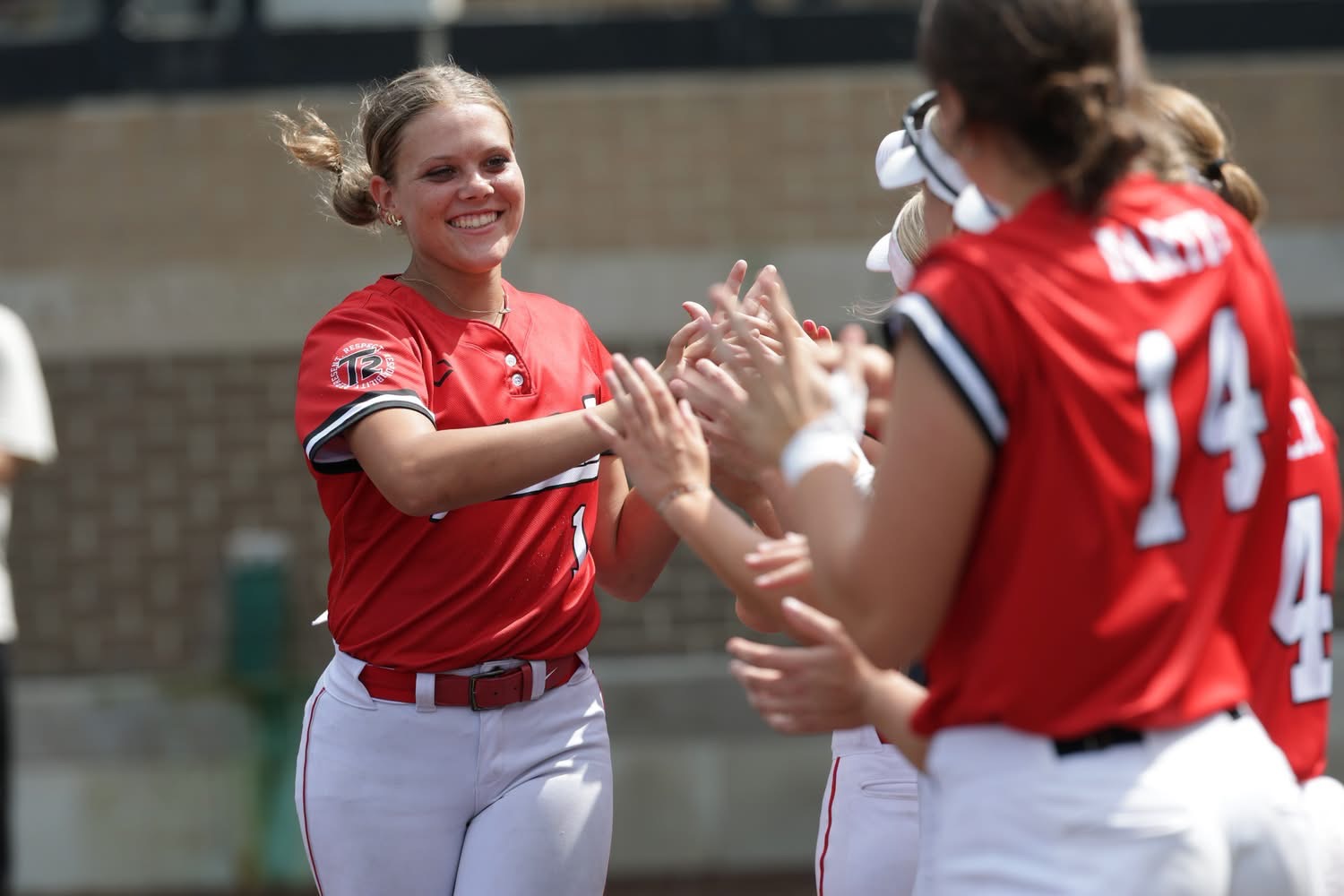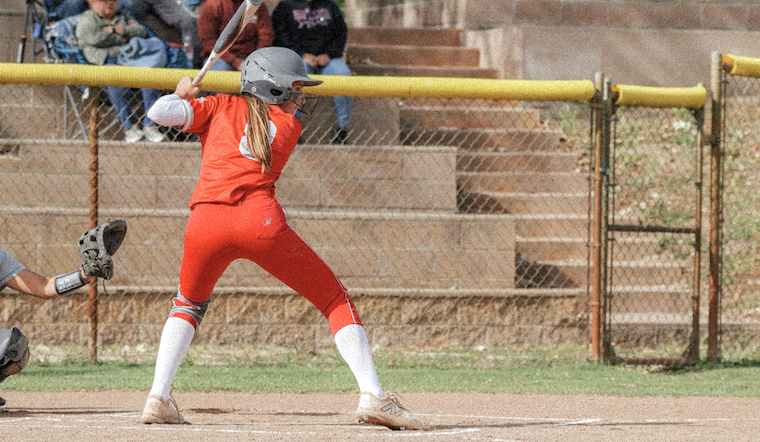
Lily Beals is one of the top young talents in the high school space, a 2028 lefty hitting shortstop from Carmel, Calif.
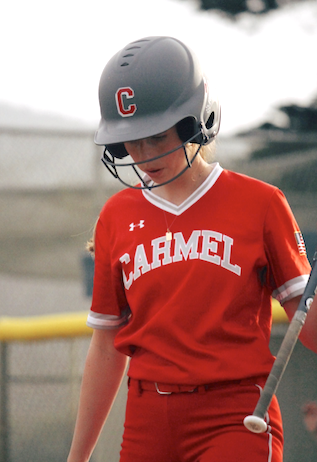
In 2025, she tore it up last year—hitting .546 as a freshman with a .583 OBP at Carmel High and then batted .486 with a .526 OBP in the fall, paying on 14U, 16U and 18U standout teams including an Alliance Nationals appearance with a Firecrackers 16U team.
In our prep for an article we on February 13 titled: Road Warriors: Central Cal Sophomore Shortstop Lily Beals and Her Father Stephen… Driving 72,000 Miles Annually (& Loving Every Minute of It!) Feb. 13, 2026, we were impressed with Lily’s approach to the game and her ability to articulately convey what works for her on the field.
We asked her to share her thoughts periodically to our Line Drive audience and in this outstanding first effort, she explains how important she’s found the concept of rhythm to be in her softball success…
*****
Softball is a rhythm sport.
As a leadoff hitter, my job is simple:
- get on base,
- move runners, and
- create pressure.
When I’m locked in, the game slows down. I’m focused, my breathing settles, my mind is clear. I just compete, pitch by pitch.
Rhythm doesn’t just happen… it’s built.
It’s built in the cages. In conditioning. Repeating the same movement over and over until it feels automatic. It’s built through preparation which leads to confidence.
But I’ve learned something else, too.
Rhythm is affected by environment. A negative environment can completely disrupt your rhythm.
*****
Why Positive Instruction & Leadership Matter
Early in my career, I had a weekend where I went 2-for-12.
I was anxious and I was overthinking.
There was constant instruction every pitch, reminders, adjustments, corrections. I couldn’t focus or compete because I was overwhelmed by the noise. All the preparation for this moment was wasted because my rhythm was gone.
That weekend taught me something important: Correction matters and accountability matters, but rhythm matters just as much.
When instruction turns into noise, you tighten up; when leadership gives you belief and space, you expand.
Later, when I transitioned to a new program, I remember one of my first at-bats. My coach looked at me and said:
“I believe. Do what you do.”
The environment shifted. There was less noise and more trust. I went back to competing freely and hit .750 shortly after. My swing didn’t magically change—my rhythm came back.
That season, I hit .600.
*****
The Impact on Adversity on Growth
That moment stuck with me.
I’ve started to understand that high-performance environments aren’t loud, they’re intentional. The best leaders take the time to understand how their players tick.
They don’t coach everyone the same way.
- Some athletes respond to intensity.
- Some need detailed correction.
- Some need calm.
- Some need freedom.
Great leaders adjust, but I’ve also learned that environment isn’t everything.
Adversity is part of the game.
- Errors happen.
- Strikeouts happen.
- Momentum swings.
As a leadoff hitter, I’m usually the first one to see a pitcher and the first one to feel the pressure, but I’ve learned that adversity doesn’t define who you are…
… your response does.
When my rhythm breaks, I reset:
- Slow breath.
- Narrow focus.
- Next pitch.
No panic. No spiraling. Just adjustment.
*****
A Player Isn’t Defined By One Pitch, One Hit, One At-Bat…
I train hard because I love the work and that preparation builds a confidence that isn’t fragile. It doesn’t disappear after one bad at-bat.
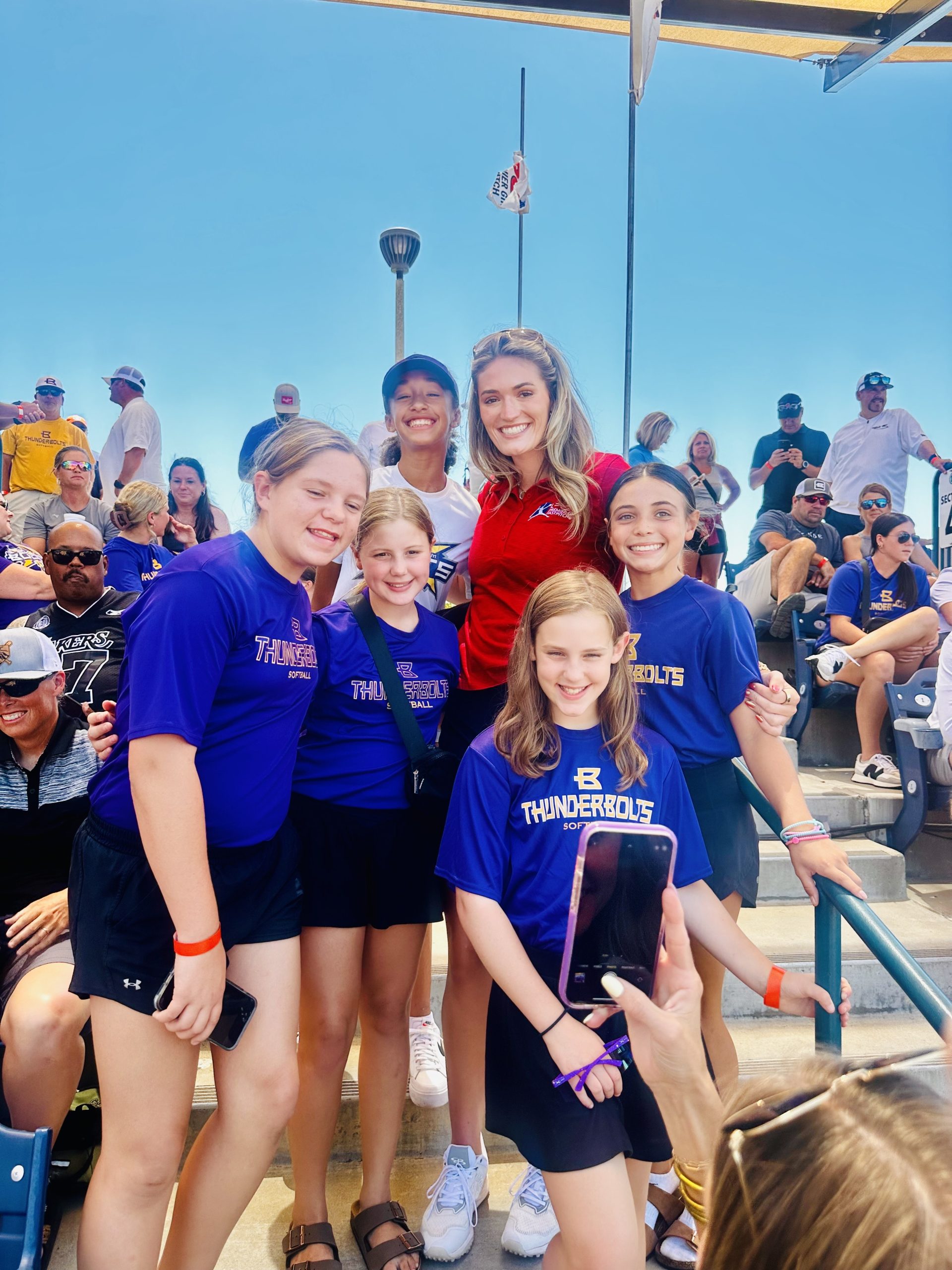
Recently, Montana Fouts said something that really stuck with me:
“You are not defined by one at-bat.”
At the highest levels of this game, that mindset matters.
- One swing doesn’t define you.
- One mistake doesn’t define you.
- One weekend doesn’t define you.
Instead:
- Your preparation defines you.
- Your response defines you.
- Your consistency defines you.
Rhythm thrives in the right environment and the best athletes don’t just know how to find rhythm, they learn how to protect it, rebuild it, and compete through pressure.
At the next level, where the margins are smaller and the standard is higher, that ability becomes the difference.
That’s the standard I hold myself to.
— Lily Beals/Line Drive Contributor