This is Brentt Eads of Line Drive Softball… we’re excited to introduce our newest contributor to our team and—though we won’t give you all the details right now—it’s very exciting to have Tyler Johnstone on board with what we have planned with him!
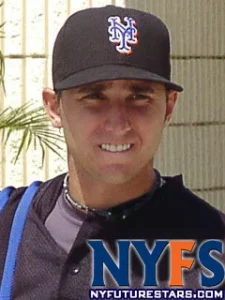
Tyler has a very strong baseball background, and in today’s introductory feature he relates in his own words the difficulties he had face to make to the college and, eventually, the pro levels… and what he learned along the way.
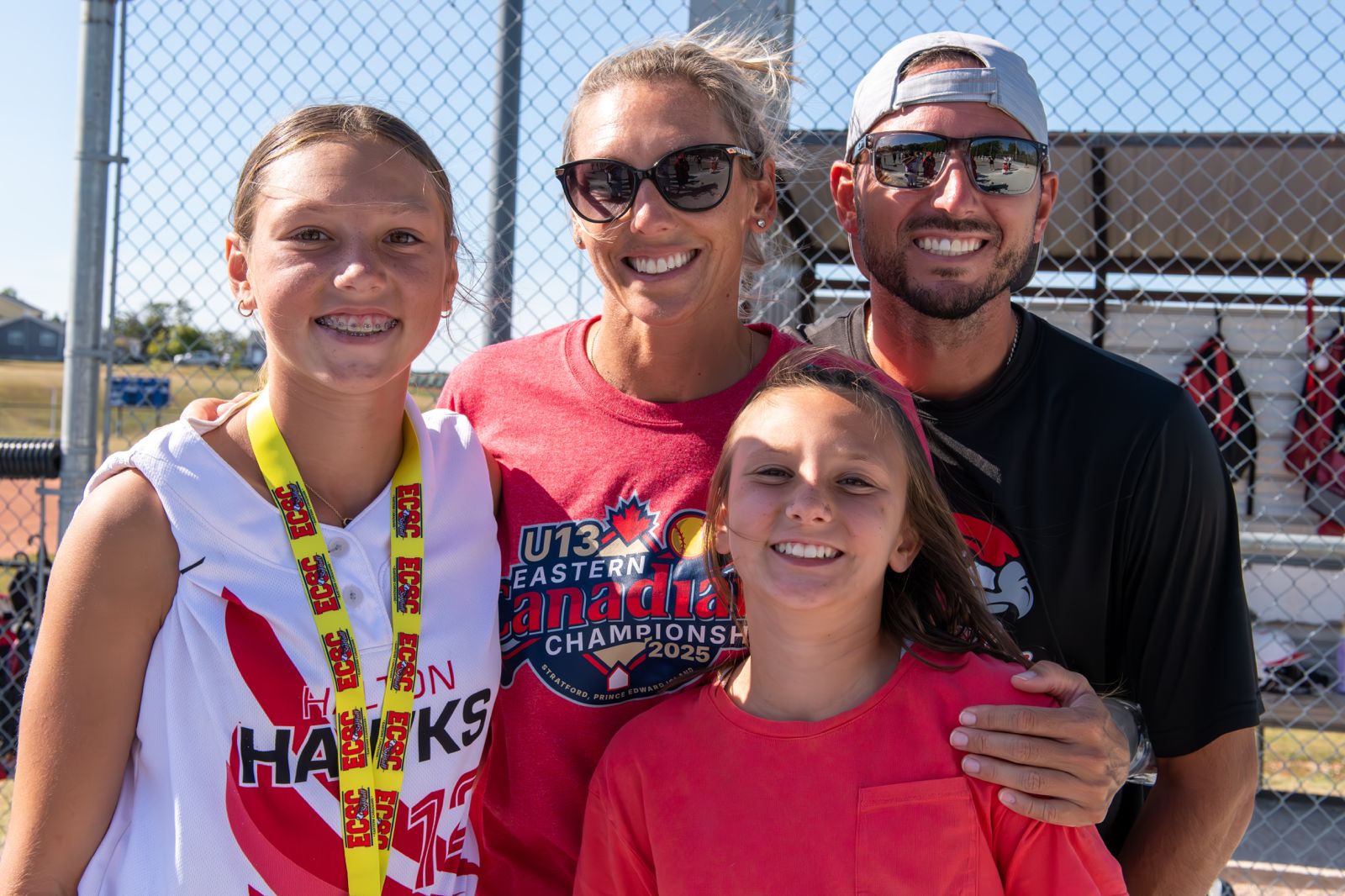
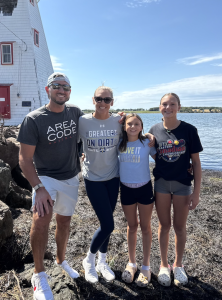
Today, his wonderful family of four—Tyler, his wife Jennifer and softball-playing daughters Chloe (12) and Aubrey (10)—have him heavily involved in the “bat and ball sport” we all love and that will continue to grow with what he will bring to Line Drive!
That will be revealed in the upcoming weeks, but first learn of Tyler and his journey that has made him into the impressive person he is today…
*****
I Was Never Supposed to Make It
I was never the kid coaches believed in… frankly, I was never supposed to make it.
Growing up just outside Toronto, Ontario, I earned the opportunity to play for an elite travel baseball team at the age of 14.
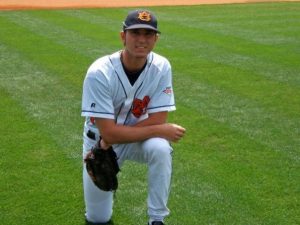
Around that same time, my mom—who had recently gone through a divorce—began dating the team’s head coach and, before long, he moved in with us. While most people would assume that situation came with preferential treatment, the reality was exactly the opposite.
There was no favoritism. No extra chances.
When I cracked the lineup, I was batting 10th. The coach—my mom’s boyfriend—would read the lineup out loud, and the team would laugh when he called my name last.
In big games—I sat, no matter how well I’d played before. It felt targeted and personal, like he wanted me to fail. The message was always the same…
… you’re not good enough.
What he didn’t realize was that every slight, every ignored inning, every sarcastic comment was being stored away… quietly and permanently.
Unbeknownst to my mother, I went home after games angry and humiliated, bottling up how I was treated on the field. I rarely shared my feelings with my parents, instead channeling that frustration into training harder, determined to prove him wrong.
My basement became my sanctuary—my escape.
The moment I got home from school, I trained: hitting, fielding and footwork, over and over, until my hands burned and my body gave out. I trained every day, harder than anyone else, knowing I had ground to make up and motivation that fueled an unmatched work ethic.
I wasn’t chasing approval anymore—I was chasing proof.
My family believed in me, and my Dad was my biggest supporter. We made a pact: he would provide me with every piece of equipment and training I needed to succeed, as long as I never gave up my work ethic.
It was a deal I took seriously—I didn’t want to let him, or myself, down.
He did everything he could to help me succeed, even hiring defected Cuban National Team infielder Damien Blen to work with me one-on-one on defense each week at a field all to ourselves.
He believed in me when it felt like no one else did.
*****
Joining the Ontario Blue Jays
Slowly, I began to change, and my confidence grew. I left that unhealthy environment behind and joined the Ontario Blue Jays—never forgetting how small I had once been made to feel before I arrived.
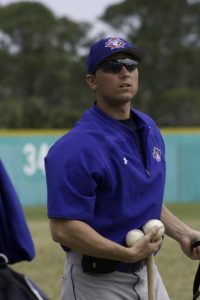
The Ontario Blue Jays were made up of the best players in Ontario, with some players traveling up to eight hours to be on the team. Every player who graduated from the program was guaranteed a scholarship somewhere.
We traveled by bus all over the United States, playing university teams such as Auburn, Michigan, Michigan State, Purdue, Virginia, and others.
There was a loophole that allowed NCAA Division I teams to play one international game in the fall without violating NCAA rules. Universities took advantage of this, and we were that one team.
These NCAA powerhouses didn’t take it easy on us. They dressed in full uniform, sold tickets, and played at full intensity. Since it was their only true game of the fall, coaches used it as a key opportunity to evaluate their players.
This provided incredible exposure for us as high school athletes and prepared us for showcase tournaments against the top U.S. high school teams in the South.
By then, I belonged, making my mark as one of the better players on the team. And, at age 16, I left high school early and accepted a scholarship to Connors State College in Warner, Okla., one of the top junior college programs in the United States.
*****
JC Ball at Connors State College (Okla.)
Moving to Warner was a shock to my system.
I was alone, in a new country, surrounded by grown men. My roommate—a 21-year-old pitcher—made it his mission to make my life miserable.
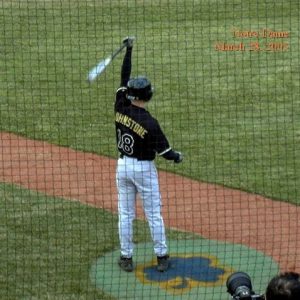
He bullied me relentlessly, spiking my drinks with niacin (which in too large of doses can cause liver damage, and increased diabetes risk), dragging me down the dorm hallway leaving rug burns on my back, throwing baseballs at me when I wasn’t looking during practice and trying to hit me intentionally while pitching during scrimmages.
I lived in fear, but eventually his time came. He made the fatal mistake of stealing my credit card and running up charges at the local gas station. The coaches found out and he was kicked off the team.
Unfortunately, my challenges at Connors State were far from over.
In junior college, the team is responsible for all field maintenance. After one practice, four players were asked to help aerate the field. One player drove the tractor, while three of us sat on the aerator to apply pressure to the spikes.
I was sitting in the middle when the two players beside me started messing around and pushing each other. I fell off the aerator and was dragged through the spikes for what felt like 20 seconds before the operator could shut off the tractor.
Somehow, I was lucky.
Rushed to the hospital with cuts and bruises, doctors told me I had only suffered a torn MCL. My cleat had slightly slipped off and a hole punctured straight through it—that could have been my foot!
God was watching over me that day.
Playing at the college level wasn’t gentle. You performed, or you were told exactly why you weren’t good enough to play. It forced me to grow up fast. Our team had success and I got better, but I knew I had more work to do.
*****
Playing at Purdue
When the season ended, I was still only 17—young enough to return and play with my high school teammates.
That summer, I rejoined the Ontario Blue Jays, more mature, tougher, and sharper. The game slowed down, and my junior college experience was evident. Division I letters began arriving daily—Arkansas, Texas, Baylor, Michigan, Purdue, Auburn, Texas A&M.
Head Coach Dave Van Horn—who has been coaching at the University of Arkansas since 2003—even offered me the shortstop position at Arkansas.
I chose Purdue University, drawn both by the baseball opportunity and by a desire to put distance between myself and my junior college days and struggles.
My sophomore season at Purdue was a success.
I batted leadoff, played second base and center field, and hit over .300 in the Big Ten. I met great people and made lifelong friends.
However, Purdue was a large and extremely expensive school, and due to Title IX regulations, the baseball program was limited to 11.7 scholarships spread across a 40-man roster.
Even with a strong scholarship, the cost became unsustainable because of foreign currency exchange rates. Knowing I had received multiple offers less than a year earlier, my father wanted to explore other options.
We reached out to my former Ontario Blue Jays coach to see if another transfer was possible… and it was.
*****
Success with the Auburn Tigers
One program that showed strong interest was Auburn University, where a fellow Canadian from Connors State was already playing. I took a visit, had a great experience, received a strong scholarship offer, and was told I would be a key part of the team.
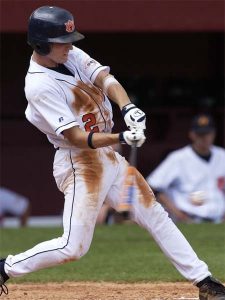
I accepted.
Auburn was an entirely different world from Purdue, even though both were major Division I programs.
The SEC carried a different intensity—fans showed up to practices, the stadium was massive, and the pressure to win was constant. Coaches treated players like professionals and provided every resource needed to succeed: elite equipment, trainers, weight rooms, and support.
But performance was non-negotiable: this was cutthroat territory, where one misstep could cost you your spot. I was ready for the challenge.
However, I had a problem, and something was wrong… my arm was in constant pain, and I couldn’t escape it.
I became reliant on Advil, taking up to 40 pills a day, which deeply worried my parents. After evaluations by the team doctors, I underwent an MRI, but it revealed nothing and the doctors couldn’t identify the issue.
This went on for months, and the coaching staff grew suspicious. My infield coach eventually called me in, sat me on the bleachers, and indirectly implied that I was afraid to play in the SEC and was faking the injury.
Word spread, and even my roommates began questioning whether I had the toughness to play at Auburn.
I knew I did, but the pain never let up. Everyday tasks became difficult, and eventually the doctors agreed to operate, believing they could clean up my shoulder over Christmas break and have me ready by the start of the February season.
*****
Dramatic Surgery
My mom flew into Birmingham, Alabama, where some of the top surgeons in the country planned to perform what was expected to be a routine scope. I knew it was anything but routine—the pain was so intense that I begged the anesthesiologist to put me under early just so I wouldn’t have to endure it any longer.
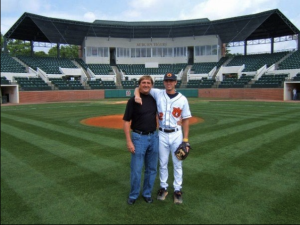
When I woke up from surgery, my mom was crying (never a good sign!). The doctors had found the issue—and it was far worse than anyone expected.
There was a tear about an inch long through the center of my bicep, which the doctor described as looking like a frayed pair of jeans, something they’d only ever seen in car crash victims… and never in an athlete.
There was nothing they could do at that time, so they sewed me back up. To fix it, they’d have to remove part of my bicep and reattach it with a screw to the bone. There was less than a 50 percent chance I’d ever use my arm normally again, never mind play baseball again.
Despite the devastating news, I felt a sense of relief. After months of doubt, people would finally believe me and understand the pain I had been living with.
Dr. Lawrence Lemak, a partner of Dr. James Andrews (the inventor of Tommy John surgery), performed the operation on my bicep.
Top professional athletes from around the world traveled to them for surgery, so I knew I was in good hands. The surgery was successful, but it only increased my chances of regaining arm function—there were no guarantees.
I medically redshirted that spring, and at the end of the season, Auburn coaches told me they had no choice but to pull my scholarship offer. Based on medical reports, they believed I would never be able to play again in any meaningful way.
I returned home to Canada.
*****
Rehab & Playing Through Pain
I rehabbed relentlessly and rebuilt myself piece by piece: Rehab. Pain. Hope… doing everything possible to give myself a chance to play again.
That summer, I coached with the Ontario Blue Jays.
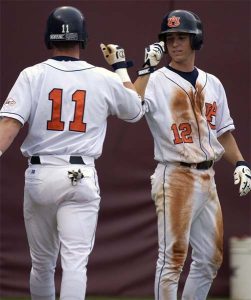
Coincidentally, the team had a tournament at Auburn University, so I went with them. While there, I met with the coaches and insisted my injury was improving and that I could play the following season—refusing to disappear.
They admired my passion but remained hesitant, telling me the decision rested with the doctor. Determined to return to Auburn, I drove to Birmingham, Alabama, for a follow-up evaluation.
Dr. Lemak shocked everyone. He was surprised by my progress and reported to the coaches that there was a small chance I could be ready to play by the start of the next season.
Based on that update, the coaches decided to reinstate my scholarship for the fall to see how things unfolded. They called me and told me to pack my bags—they were giving me one last opportunity to play at Auburn.
That fall, I couldn’t throw so I played first base. Every catch meant a timeout so I could underhand the ball back with my left arm. It was embarrassing and humbling… and I didn’t care.
I could still hit—and I hit better than ever.
*****
Record-Setting Days in the SEC & Moving on to the Mets
By spring, the sling was gone and I was cleared to throw. I was named the starting second basemen, batting leadoff for the Auburn Tigers in the SEC.
For the next two seasons, I batted leadoff and played every inning of every game for Auburn both offensively and defensively. I was named to the All-Regional team and still hold an Auburn and SEC record for the most hits in a single game, with six.
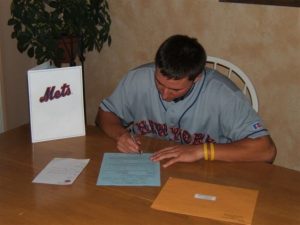
When the MLB Draft arrived, my agent expected me to be selected within the first five rounds, but my name was never called.
My medical records scared every MLB organization away. I kept pushing forward anyway and earned my opportunity, signing as a free agent with the New York Mets.
Knowing my arm wouldn’t withstand a full major league season, I ultimately chose to end my playing career after a year in the Mets’ system, with stops in Port St. Lucie, Savannah, and Brooklyn.
But I accomplished my one true goal—to prove that I belonged.
I competed against the best, turned double plays with José Valentín, learned baserunning from Rickey Henderson, faced Billy Wagner, and hit a double off Orlando Hernández (El Duque).
My journey had come full circle.
Ten years later, I received a call from Dr. Lemak’s office. They wanted to know how my arm was holding up and asked if they could use my surgery as a case study for future patients.
They were stunned that I had continued playing after Auburn —and that I still had full use of my arm.
Through every setback and challenge, I was fueled by the words of a coach who told me at 14 that I would never amount to anything in baseball.
Every time a newspaper wrote about me, I clipped the article, sealed it in a Ziploc bag, drove to my old coach’s house, rang the doorbell, and left it on his doorstep.
No note. No words. Just proof.
I was never supposed to make it… and that’s exactly why I did.
— Tyler Johnstone/Line Drive Softball contributor