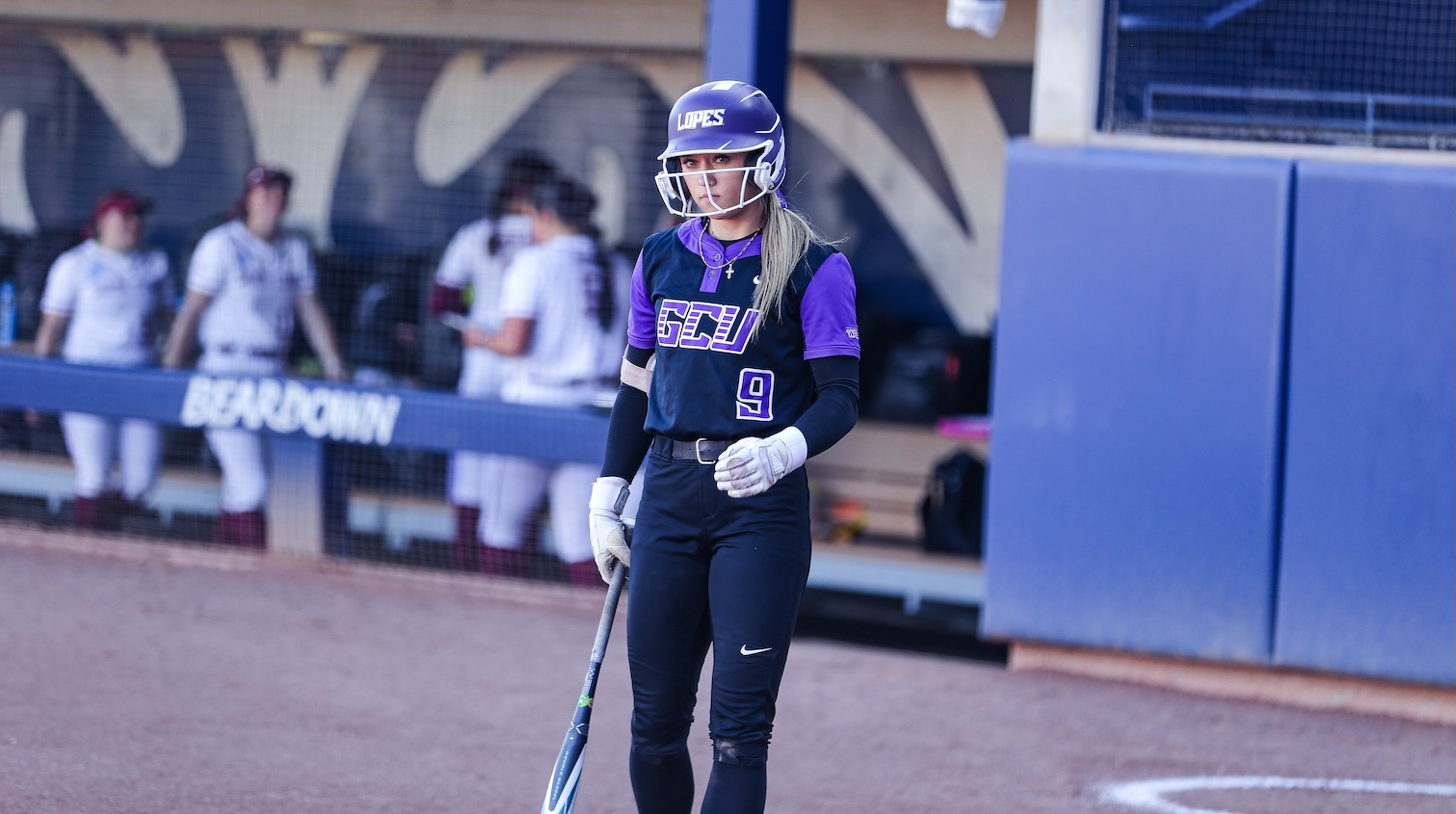
Following a dynamic 2025 season in which she was named the Western Athletic Conference Player of the Year, Grand Canyon’s Savannah Kirk was primed for an even bigger season in 2026.
Kirk was named the Mountain West Preseason Player of the Year, recognized as one of the nation’s top five second basemen in the preseason and selected as a preseason top-100 player overall.
The expectations were high. She was coming off a standout sophomore season in which she hit .505 and stole 50 bases and was expected to be a big part of Grand Canyon’s pursuit of another NCAA Tournament appearance.
But just weeks before the start of the season, Kirk tore her ACL during practice, forcing her to miss the entire year.
What began as a season of promise, with the possibility of All-America recognition and another NCAA Tournament bid for the Lopes, turned into a test of patience, perseverance and faith.
For a player accustomed to making an impact on the field, the months that followed would challenge her in ways she never anticipated.
*****
A Season Taken Away
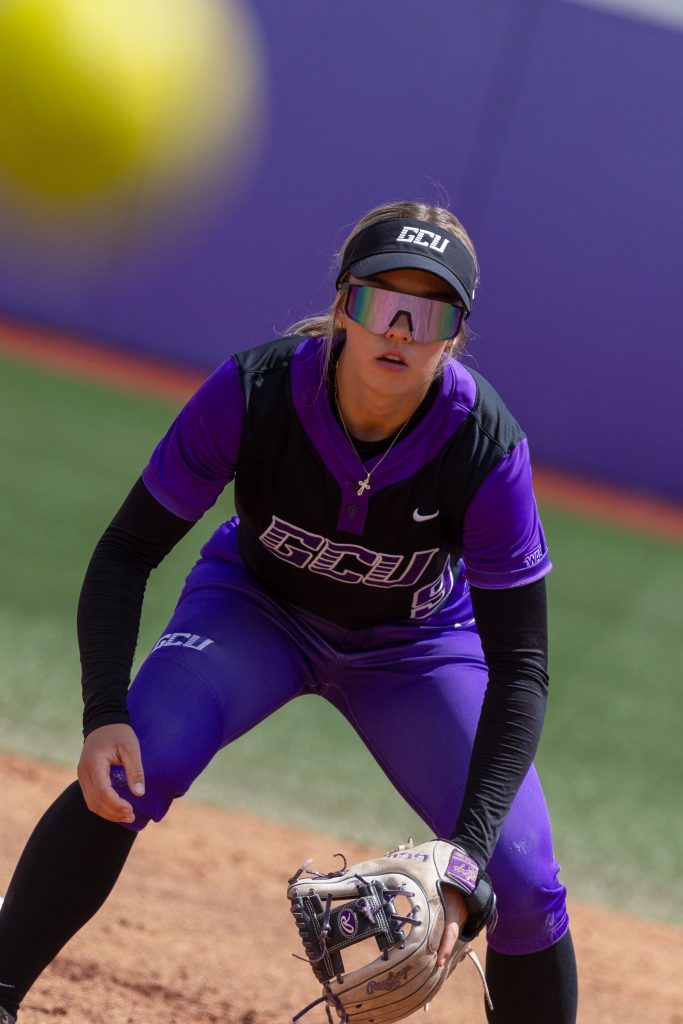
When Savannah first injured her knee, she didn’t immediately realize how serious it was.
“It wasn’t as bad as I expected it to be tearing my ACL,” she said. “I got up, I walked off on my own, and then I did some lunges, did some jogging, and I was like, ‘Oh, I’m good. Like, it’s a little painful, but I’m good.'”
Then she sat down, and the pain intensified.
“My knee was just on fire,” she said. “And then I was like, ‘I don’t think this is normal.'”
She hadn’t done anything that made her suspect a major injury. She had simply fallen backward and initially assumed it was something minor.
The diagnosis changed everything.
When Kirk learned she would need surgery and miss the season, the disappointment was immediate.
“Every negative thought possibly just came in my head,” she said. “I just started bawling because of all the work that I put in and kind of just the expectation that I had to be like for my coach, for my team.”
After her sophomore season, Kirk had expected to be a big leader and an important part of the Lopes’ success. She had put in the work, prepared for the season and looked forward to seeing what she and her teammates could accomplish.
Suddenly, she was facing a year away from the game.
“Everything I’ve been looking forward to is just done,” she said.
For someone who had spent so much time preparing to compete, the challenge was learning how to handle a season she couldn’t control.
*****
Learning to Start Again
Rehabilitation quickly showed Savannah that returning to the field would require patience.
One of the first challenges was something she had never imagined would be difficult: activating her quadriceps muscle.
“When they told me, I was like, ‘I’ll be able to do that. Like, it’s not that big of a deal,'” she said. “No, I struggled with that.”
Even walking independently required her to learn how to use the muscle again. Regaining her range of motion also took longer than she had hoped.
Just as she began progressing into more movement-based rehabilitation, another obstacle emerged. Savannah developed significant pain in the front of her knee, which was attributed to patellar tendinitis and limited the work she could do.
The frustration grew during the summer, particularly when she watched another athlete who had undergone ACL surgery around the same time make progress.
The two were doing many of the same exercises, but their recoveries didn’t follow the same timeline.
“He was doing stuff, and then I was like, ‘Why am I not doing this?” she said.
Comparing her progress with his made an already difficult process more frustrating.
“I was comparing myself a lot,” she said. “So, it was pretty frustrating when I was doing stuff, but I couldn’t do stuff that he was doing.”
Savannah had always been someone who focused on the bigger picture. She wanted to improve, accomplish her goals and see the results of her work.
Rehabilitation forced her to change that approach.
She began learning to appreciate the small milestones, recognizing that even seemingly minor improvements represented progress.
“I learned when I was doing something that I wasn’t able to do before, I learned to be happy with what it is,” she said.
The process was unpredictable. She could feel good one day and experience discomfort the next.
It was a lesson in patience for a player accustomed to pushing herself toward the next goal.
*****
Finding a Different Purpose
While Savannah couldn’t contribute on the field, she still wanted to find a way to help her teammates.
Watching from the sidelines gave her a different perspective on the game and her role within the program.
“When I’m playing, there’s stuff that I have to be thinking about that I need to work on,” she said. “But when I’m sitting there watching them, I can tell them, ‘Oh, you did good at this. Maybe do this instead.'”
She began noticing things she might have overlooked while concentrating on her own performance. Instead of focusing solely on what she needed to improve, she could watch her teammates and offer advice.
It was a different kind of contribution, but an important one.
Her teammates also helped her remain connected to the program throughout her recovery. Their prayers and simple gestures of checking in meant more than they might have realized.
“When I’m used to playing all the time and then I’m not on the field with them, I feel a little left out,” she said. “Not like they did that on purpose, but, you know, I can’t be with them all the time.”
Knowing her teammates were thinking about her helped ease that feeling.
“Them just checking in and praying for me and stuff really just made me feel like they were thinking about me, or I wasn’t just pushed to the side in a way,” she said.
The experience also changed how Savannah evaluated the game.
Before the injury, she tended to focus on the bigger picture and her own production. If she didn’t get as many hits as she wanted, it could overshadow other aspects of her performance.
Watching from the sidelines helped her appreciate the smaller contributions that can make a difference.
It also strengthened her understanding of leadership. She learned that being a good teammate wasn’t limited to what she could do with a bat or glove.
She could encourage, advise and help others improve.
*****
More Than the Game
Perhaps the most significant change in Savannah’s life during her recovery came from looking beyond softball.
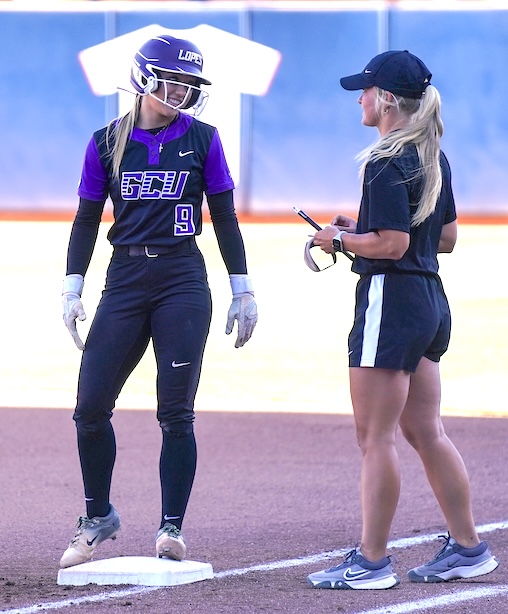
The injury brought her closer to her faith and forced her to consider how much of her identity had become tied to the sport.
“My faith became a big part of it,” she said. “I got a lot closer with the Lord doing this because I kind of realized that softball can be taken away from me at any moment, and it’s not, it doesn’t define me.”
For a player who had invested so much time and effort into the game, the realization offered a different perspective.
Softball remained something she loved, and she still wanted to compete at a high level. But being away from it helped her understand that her identity was bigger than her performance.
The injury also revealed something about the way she responds to challenges.
When asked what she learned about herself during the process, Kirk explained that struggling with something often makes her more determined to improve.
“If there’s something I’m not doing well, then it makes me want to drop everything and try to figure out what I need to do to get better at it,” she said.
That determination helped her navigate the setbacks of rehabilitation, even when progress felt slower than she wanted.
Eventually, she reached a point when she could run and change direction without constantly looking down to check her knee.
In September, she noticed a difference.
“I was able to just go and run and do anything without thinking about it,” she said. “And I was like, ‘Oh yeah, this is good. Like, this is a good feeling. My knee hasn’t felt like this in a while.'”
It was an encouraging milestone after months of monitoring every movement and wondering when she would feel normal again.
Her recovery progressed well enough that she received medical clearance to return to competition earlier than initially anticipated.
The next challenge was finding out what it would feel like to play again.
*****
Back Where She Belongs
When Savannah returned to the field in the fall, she discovered that the nerves weren’t necessarily about her knee.
She trusted the work she had put into rehabilitation and believed her knee was strong enough to compete.
Instead, she worried about what others might think.
“I didn’t want people to think that I was overrated,” she said. “I wanted to prove to people that I’ve been working at all the stuff, and I haven’t just been laying around in my bed all year.”
After spending so long working toward her return, Savannah wanted to show that the time away hadn’t diminished her abilities.
Then she got her first hit.
It was a familiar moment, a reminder of the player she had been before the injury and the work she had put in to get back.
“It was nice,” Kirk said. “Kind of just let me chill out a little bit. It’s just a good relief. Be like, ‘OK, I got this. Like, now I can go.'”
The hit helped ease the pressure she had placed on herself. She had spent months working to get back, wondering how long it would take before she could compete without thinking about her knee.
Now, she had proof that she could.
The return wasn’t simply about showing others she could still play. It was about experiencing something she had spent an entire season missing.
She was back on the field, doing what she loved.
*****
Ready for What’s Next
Savannah’s return gives Grand Canyon an experienced player and a proven performer as the Lopes look to take another step forward.
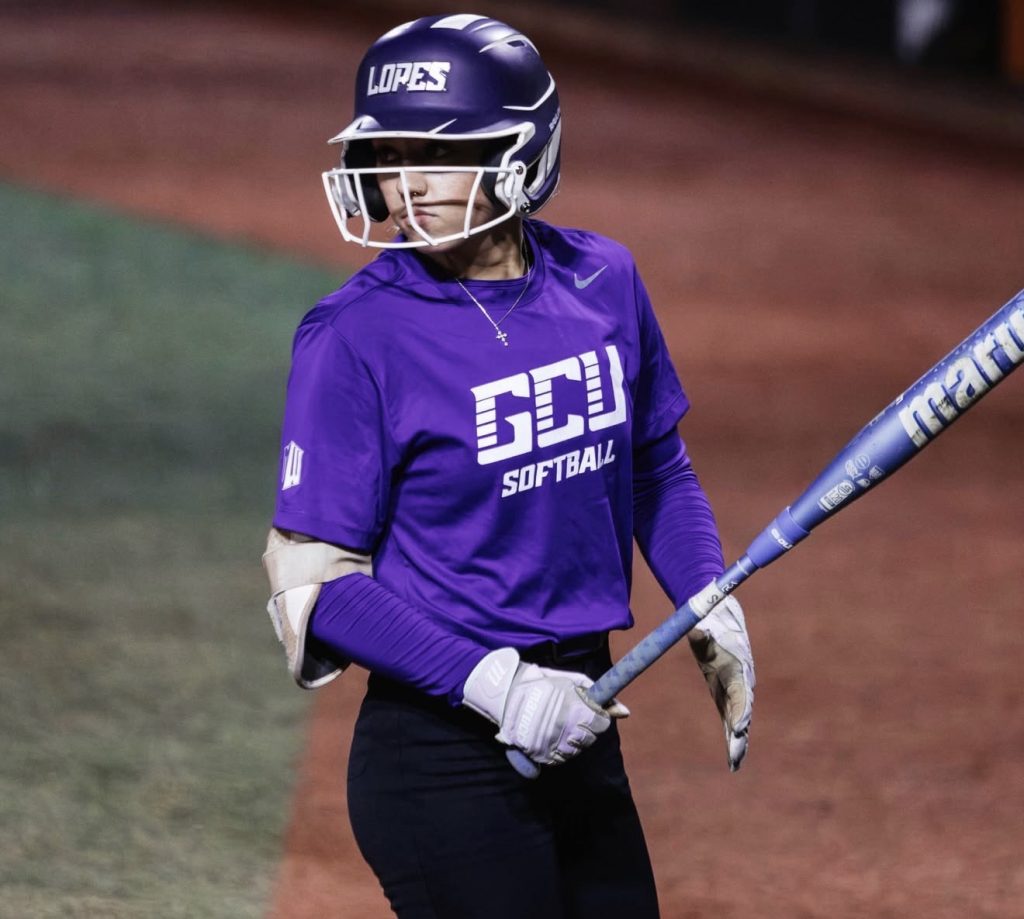
She has personal goals, including improving on the 50 stolen bases she recorded in 2025 and surpassing the program’s single-season record of 51. She also wants to be the best leadoff hitter and second baseman she can be while continuing to grow as a leader.
But her year away from the field reinforced the importance of putting the team ahead of individual accomplishments.
Grand Canyon has yet to advance beyond the regional round of the NCAA Tournament during her time with the program. The Antelopes want to change that, and Savannah understands what it will take.
“We know that we can compete with these teams,” she said. “So, we just really want to make it as far as we can past the regionals.”
Achieving that goal will require a collective effort rather than one player trying to carry the team.
“Not one person can win those games,” she said. “That has to be a whole team.”
She pointed to the small things that can change a game, such as getting a sacrifice bunt down or doing whatever is needed to help the team succeed.
It’s a perspective that reflects what she learned while she couldn’t play.
For a year, Savannah had to find new ways to contribute, celebrate small victories and learn to be patient with a process she couldn’t rush.
Now, she is back in uniform, grateful for the opportunity to compete again.
“It’s such a blessing that my body has even allowed me to come back and all the work that I’ve put my body through,” she said.
She is excited to represent Grand Canyon, play for her teammates and show that the Antelopes can compete with the nation’s best.
For Savannah, the return is about more than reclaiming her place in the lineup. It’s about appreciating the opportunity and understanding that, while softball is an important part of her life, it doesn’t define her.
After a year away from the game, she’s ready to play again.
— Roger McAfee/Line Drive Correspondent