
Ron Schmittling is a renowned Mental Performance Coach and author of Winning Starts Within and contributes articles frequently to Line Drive Media.
Ron is excellent at providing ideas, tips and training on how to improve “mental performance for fastpitch athletes!
In today’s post, he does an excellent job at pointing out the difference between practicing when things are calm versus when there’s something important on the line.. like the outcome of a game!
Ron presents a three-part plan on how to handle the pressure in the moment to make it a positive one, not a self-defeating outcome!
*****
Crunch Time
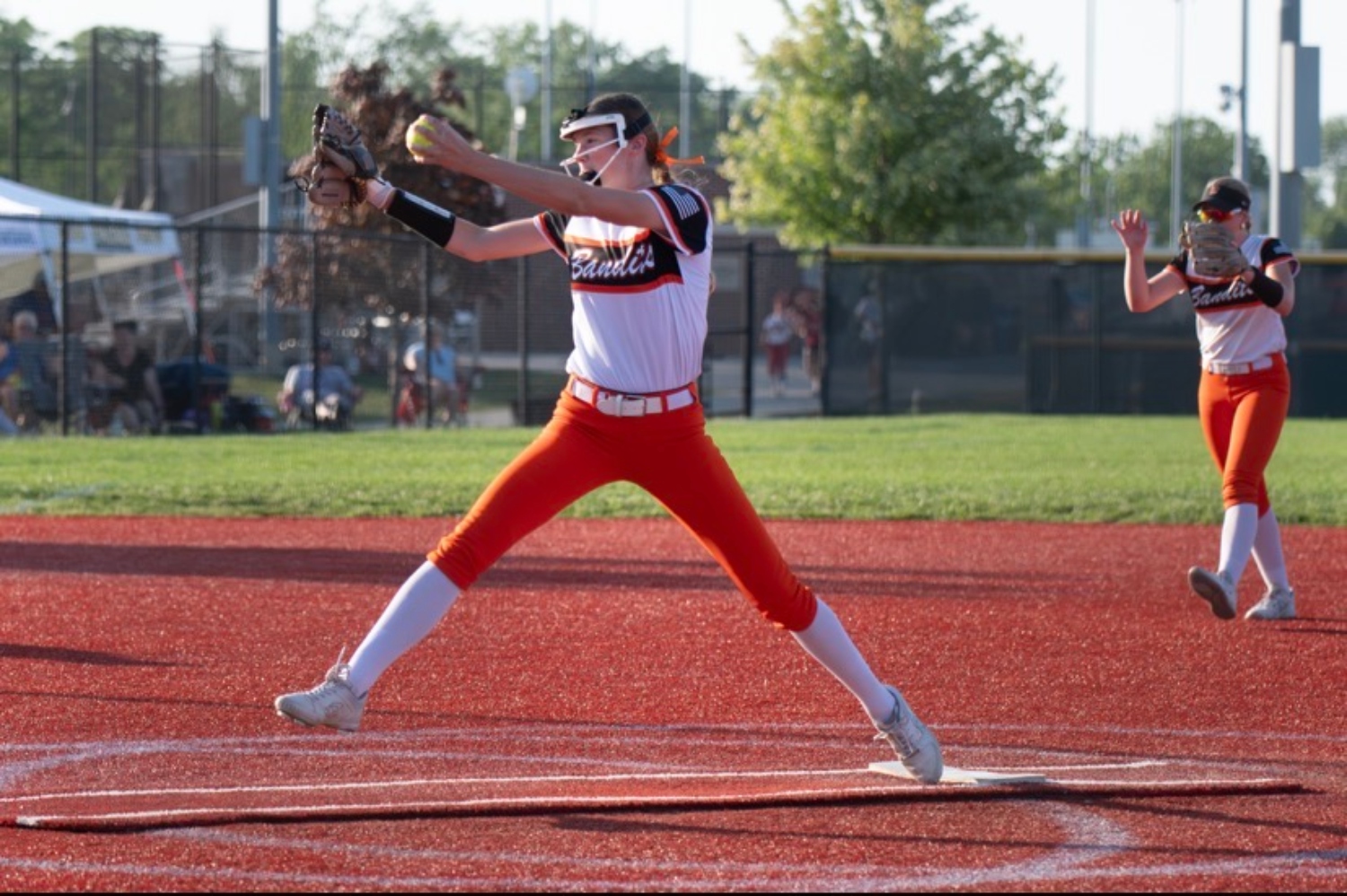
It’s the bottom of the seventh, bases loaded and a full count.
She has thrown this pitch a thousand times:
- In the bullpen on Tuesday.
- In the cage on Thursday.
- On a quiet field with nobody in the box and her catcher saying “nice” after every pitch.
Now there’s a hitter in the box, a crowd on the fence, and a whole dugout holding its breath.
Her grip gets tight, her stride gets short and he ball sails high.
Ball four and the run scores.
In the dugout she says it quietly.
“I threw that pitch all week.”
She did… she just never threw it with anything on the line.
… and that’s the rep most athletes never practice.
*****
Calm Reps Don’t Transfer

Recently, the states that play their high school softball in the fall—Georgia, Oklahoma, Missouri, Nebraska, Colorado and some schools in Mississippi—wrapped up their seasons and they—and others who have been busy the last couple months in club ball—are all finding out the same thing that pitcher found out:
Most practice is calm: hitters get 40 swings off a tee, defenders take ground balls with no runner and pitchers throw in bullpens with no count.
Calm reps build the skill, true, but they don’t build the skill under pressure so when the big moment shows up, the player’s body meets pressure for the first time in the game that counts.
How does the body react?
It treats the situation like a threat as hands tighten, breathing gets high and focus jumps from the ball to the scoreboard.
So what’s happening?
She’s not a worse player on Saturday—she’s just meeting the noise for the first time.
The fix isn’t more reps, it’s a different kind of rep.
Dose. Score. Debrief.
- Dose it.
Add a little pressure on purpose. Not a lot. Just enough that the heart rate picks up. Pitchers: finish every bullpen with five pitches from a full count, with a hitter standing in. Hitters: end each round with one two-strike at-bat with a runner on third. Fielders: one ground ball where the whole team watches and it has to be clean. Catchers: one throw down with a real runner and a stopwatch.
- Score it.
Make it clear what counts before the rep starts. “Hit it hard somewhere” is clear. “Do better” is not. “Hit the glove on the outside corner” is clear. “Throw strikes” is not. When she knows the target, the guessing goes away. And guessing is half of what makes pressure feel heavy.
- Debrief it.
Thirty seconds after the rep. No lecture, just three questions. 1) What did you notice? 2) What did you do with your breath? 3) What would you keep?
That’s how a pressure moment turns into information instead of a verdict.
*****
Why It Works

In Winning Starts Within, I call this the Confidence Bank Account. Every day you make deposits or withdrawals. A pressure rep that goes well is a deposit. So is a pressure rep that goes badly and gets a good debrief.
I wrote it this way in the book:
“Confidence isn’t about hoping you’ll succeed; it’s about accumulating evidence that you’re ready to succeed.”
That’s what Dose, Score and Debrief builds: evidence.
When the full count shows up in the seventh, she doesn’t have to hope. She’s been there 50 times in practice. She knows what her hands feel like, she knows what her breath does and she knows her one job.
Pressure didn’t go away—it just isn’t new anymore.
*****
What the Adults Should Do
* Coaches: the dose belongs in practice, and it only works when there’s trust. If a pressure rep ends with yelling, players learn to fear the rep, not train it. Keep it short. Keep it on purpose. Debrief every time.
* Parents:, the car ride home is not the place to add a dose. Your job is the ground it all stands on. A calm face after the walk-off loss does more for her pressure game than any speech in the driveway.
*****
Your Challenge this Week
* Athletes: Pick one moment that rattles you. Two strikes. Full count. Runner on third with one out. Ask to finish one practice this week with that exact moment. Then answer the three questions out loud.
* Coaches: End every practice this week with one rep that counts. Tell them the target before it starts. Then give them thirty seconds of debrief, not three minutes of correction.
* Parents: On the drive home, skip “What happened in the seventh?” Ask “What’s one thing you’d keep from today?” Then let her lead.
Pressure is coming either way; the only question is whether she’s met it before!
That’s the mental edge!
*****
Previous Articles:
- Mental Mindset: Play the Pitch, Not the Clipboard (Oct. 20, 2026)
- Mental Mindset: The Word That Ends More Softball Careers Than Any Injury (Sept. 26, 2026)
- Mental Mindset: What A Big Event Like Club Nationals, the Women’s College World Series or the Olympic Games Reveals About Mental Performance (Aug. 12, 2026)
- Mental Mindset: What to Do When You Start Pressing at the Plate (May 11, 2026)
- Mental Mindset: The Silent Skill That Builds Confidence (Apr. 6, 2026)
- Mental Mindset: The Most Dangerous Score in Softball (Mar. 9, 2026)
- Mental Mindset: Why Teams Tighten Up in Big Games (Feb. 23, 2026)
- Mental Mindset: How One Negative Thought Hijacks an Entire Game (Feb. 2, 2026)
- Mental Mindset: Why Confidence Disappears in Games (and How to Build It Back) (Jan. 19, 2026)
- Mental Mindset: Why “Just Relax” Is the Worst Advice in Softball (Jan. 5, 2026)
- Mental Mindset: The 5-Second Rule That Separates Winners from Quitters (Dec. 13, 2025)
- Mental Mindset: From Dropout Statistics to Champions… Why the Mental Game Can’t Wait (Nov. 24, 2025)
*****
Want More?
The Mental Performance Diagnostic helps you pinpoint what’s holding you back—confidence drops, overthinking, slow recovery after mistakes, or inconsistent performance.
In 30–45 minutes, you’ll get a clear breakdown of your mental game and a focused action plan with tools you can apply immediately to perform better under pressure.
To book your session: CLICK HERE
*****

Coaches:
Want your whole team trained in these tools? I deliver 60-90 minute workshops where players and teams learn and apply these techniques immediately.
*****
Author Bio:
THE MENTAL EDGE is written by Ron Schmittling, MPM—Certified Mental Performance Coach, NFCA Coach of the Year finalist, and author of Winning Starts Within and Into The Storm.
After more than a decade coaching and directing a national fastpitch program with a 100 percentage college placement rate, Ron now trains the mental side of the game, helping athletes stay composed under pressure, reset fast, and compete with clarity and confidence.
Here’s how to access Ron directly and via his info on social media:
E-mail: ron@coachronmpm.com
Online (website): coachronmpm.com
Instagram: https://www.instagram.com/coachronmpm